qbhborescope@gmail.com
October 29, 2024

Non-destructive testing (NDT) is essential in ensuring the integrity and safety of a wide range of materials and components in industries like aerospace, automotive, and manufacturing. One crucial tool used in NDT is the endoscope, which enables viewing areas that are hard or impossible to reach using traditional inspection methods. In this article, we will explore the main types of endoscopes utilized in NDT, highlighting their characteristics and applications.
1. Flexible Borescope
A flexible borescope features a bendable tube that allows for easy navigation through complex paths and curves. This type is ideal for inspecting hard-to-reach areas in industries like aerospace and automotive.
- Advantages: Easily maneuvers around bends and obstacles.
- Best for: Applications needing access to curved or angular spaces.
- Example Use: Inspecting internal engine components without disassembly.
2. Rigid Borescope
The rigid borescope consists of a straight, non-bending tube and provides high image clarity. It’s durable and commonly used for applications where a direct line of sight is possible, such as inspecting cylindrical structures.
- Advantages: Delivers high-resolution images with minimal distortion.
- Best for: Straight-line inspections in durable environments.
- Example Use: Quality control in precision manufacturing.
3. Video Borescope
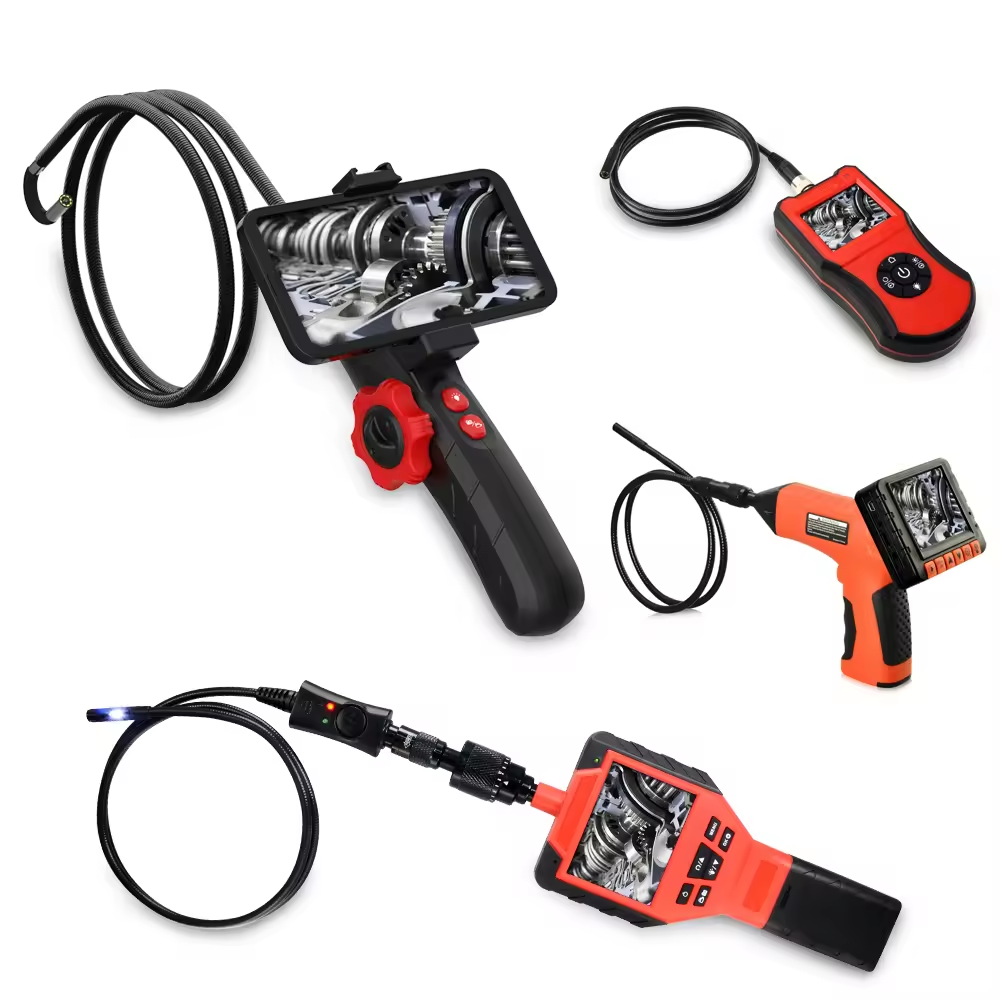
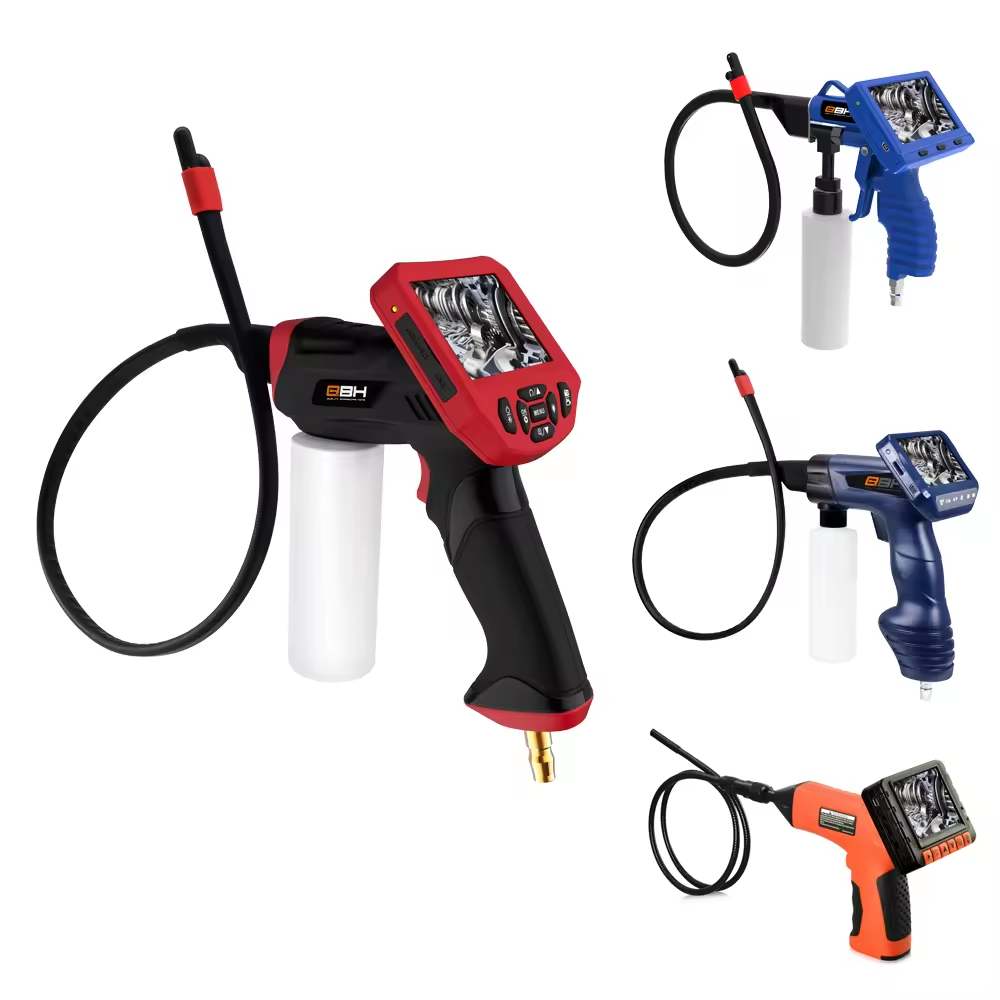
Equipped with a built-in video camera, the video borescope allows for real-time viewing and recording of inspections on a display screen. These versatile tools are widely used across various sectors, from oil and gas to construction.
- Advantages: Real-time viewing and recording capabilities.
- Best for: Documenting inspections and sharing visuals.
- Example Use: Pipeline inspections where documentation is essential.
4. Optical Borescope
An optical borescope provides high-quality visual inspection using a series of lenses. This type is preferred in industries where superior image quality is crucial, such as aerospace.
- Advantages: Exceptional image clarity without digital components.
- Best for: Environments with electromagnetic interference.
- Example Use: Aircraft engine inspections.
5. Fiberscope
A fiberscope uses fiber-optic technology, making it invaluable for inspecting highly confined spaces like fuel tanks and pipes. Its flexibility allows it to navigate intricate areas easily.
- Advantages: Highly flexible and capable of operating in extreme environments.
- Best for: Inspection of hazardous or confined areas.
- Example Use: Inspections in environments with volatile gases.
6. Digital Borescope
Digital borescopes enhance functionalities with built-in screens and recording features, often providing wireless connectivity for easy data transfer. They are suitable for complex inspections requiring rapid reporting and analysis.
- Advantages: User-friendly interface and digital capabilities.
- Best for: Inspections needing quick reporting.
- Example Use: Factory equipment checks in industrial settings.
Choosing the Right Borescope for Your Needs
Selecting the appropriate type of borescope can enhance inspection accuracy and efficiency. Whether your application involves automotive diagnostics, aerospace component checks, or pipe inspections, the right tool ensures comprehensive visibility.
| Borescope Type | Key Feature | Common Uses |
|---|---|---|
| Flexible Borescope | Maneuverable through curves | Engines, complex machinery |
| Rigid Borescope | High-resolution, straight view | Quality control in manufacturing |
| Video Borescope | Real-time viewing and recording | Pipeline, construction site inspections |
| Optical Borescope | High-definition lens system | Aircraft engines, defense systems |
| Fiberscope | Fiber-optic flexibility | Hazardous environment inspections |
| Digital Borescope | Screen display, data transfer | Industrial maintenance and QA |
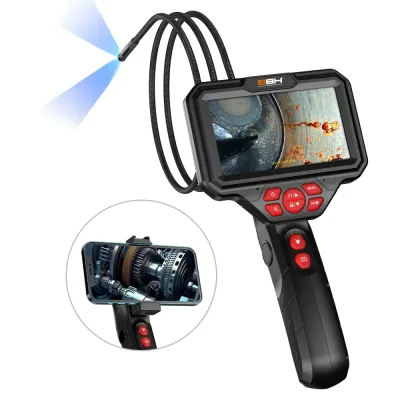
Recommended Tool for NDT Inspections: US18 Dual Lens Borescope
For those seeking versatility, the US18 Dual Lens Borescope offers exceptional functionality:
- One-Megapixel Dual-Lens: Switch lenses based on application needs.
- Wide-Angle Camera: Extensive visibility in each inspection.
- Micro High-Definition Camera: Detailed visuals for quality assessments.
- IP67 Waterproof: Ideal for rugged environments.
- Cross-Platform Compatibility: Supports PC, Android, and decoders.
Ready to Improve Your Inspection Processes?
If you need a high-performance borescope for precise inspections, the US18 Dual Lens Borescope is a versatile option that adapts to various NDT applications. Contact us today to learn how the US18 can elevate your inspection standards with ease and efficiency!