qbhborescope@gmail.com
October 30, 2024

Lithium-ion batteries power many modern devices, but knowing when and how to test them for optimal performance is crucial. In this article, we’ll cover practical methods for testing a lithium cell battery and examine key factors for measuring battery health and longevity.
Table of Contents
- Understanding Lithium-Ion Battery Testing
- Why Regular Testing is Important
- How to Test a Lithium Cell Battery with a Multimeter
- At What Voltage Is a Lithium Battery Dead?
- Common Indicators of Battery Health
- Using QBH WT07 for Accurate Battery Testing
- Contact Us for Reliable Battery Testing Solutions
Understanding Lithium-Ion Battery Testing
Lithium-ion batteries are a staple in smartphones, laptops, and power tools due to their high energy density and rechargeability. As these batteries degrade, their performance diminishes. Testing lithium batteries is essential to maintain device performance, safety, and energy efficiency.
Why Regular Testing is Important
Testing lithium batteries helps identify potential problems like low voltage, poor charge retention, and rapid discharge. This process offers several benefits:
- Detects Early Failures: Regular tests can reveal issues such as short charging cycles or reduced voltage levels, helping avoid costly replacements.
- Prevents Overcharging: Identifying a degraded battery early on prevents overcharging, which can harm battery health and device safety.
- Extends Device Lifespan: By keeping a close eye on battery health, you can prolong the lifespan of both the battery and the device it powers.
How to Test a Lithium Cell Battery with a Multimeter
Testing a lithium-ion battery with a multimeter is simple yet effective. This method helps you measure voltage accurately and diagnose early signs of battery deterioration.
Step-by-Step Guide:
- Charge the Battery: Fully charge the battery before testing, ideally by plugging it in for at least 45 minutes.
- Set up the Multimeter: Switch your multimeter to “DC Voltage” mode.
- Connect Probes: Attach the multimeter’s red probe to the positive terminal and the black probe to the negative terminal.
- Read the Voltage: Observe the reading on the multimeter’s display. A fully charged battery typically shows a slightly higher voltage than its nominal rating.
- For instance, a 3.7V battery may read around 4.2V when fully charged.
- Interpret Results:
- If the voltage is significantly lower than expected, the battery may be close to end-of-life.
- If the battery charges but rapidly loses power, additional testing for resistance and charge capacity is recommended.
At What Voltage is a Lithium Battery Dead?
Lithium-ion batteries typically lose usability once their voltage drops below a certain threshold. For most lithium-ion cells:
- 3.7V cells operate between 4.2V (fully charged) and 3.0V (low charge).
- If the voltage drops below 3.0V, most batteries are considered dead and may require replacement.
Common Indicators of Battery Health
In addition to voltage readings, there are several other indicators of battery health:
- Rapid Self-Discharge: A battery that loses charge quickly when not in use may be failing.
- High Internal Resistance: Increased resistance inside the battery can reduce performance.
- Increased Charging Time: Extended charging times are often a sign of decreased battery capacity.
- Overheating: Excessive heat during charging is a clear indication of a faulty battery.
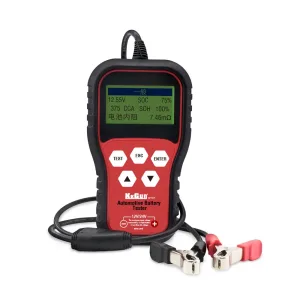
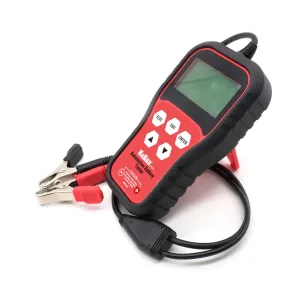
Using QBH WT07 for Accurate lithium cell battery
For advanced battery testing, the QBH WT07 offers a highly accurate and user-friendly option with unique features:
| Feature | Description |
|---|---|
| LCD Digital Display | Clear display for easy reading and real-time monitoring. |
| Protective Rubber Protector | Durable, anti-skid casing that resists wear for long-lasting use. |
| Clamp Bite Force | Strong, stable contact ensures accurate and reliable measurements. |
| Multiple Testing Functions | Includes battery life measurement, Cold Cranking Amps (CCA), start load voltage, and voltage tests. |
| Internal Resistance Measure | Tests internal resistance for battery performance insights. |
| Charging System Testing | Analyzes charging system efficiency to detect potential issues. |
| Reverse Input Protection | Protects against improper probe connection to ensure tester safety and battery protection. |
The QBH WT07 is ideal for users seeking professional-level accuracy in battery testing. By monitoring battery life, voltage, and internal resistance, the QBH WT07 provides essential information for assessing battery condition and planning timely replacements.
Contact Us for Reliable Battery Testing Solutions
Ready to optimize your lithium battery performance? Get in touch with us to learn more about QBH’s innovative testing solutions, including the reliable QBH WT07. Our team is here to help ensure your devices operate at peak efficiency and safety.
Contact Us to explore our full range of battery testing tools and solutions today!