qbhborescope@gmail.com
November 22, 2024

Table of Contents
- Working Principle of UV Light Inspection
- Main Uses of UV Light in Endoscope Lens Inspection
- Advantages of UV Light Inspection
- Application Scenarios in Different Fields
- How to Properly Use UV Light for Inspection
1. Working Principle of UV Light Inspection
UV light, also known as ultraviolet light, emits wavelengths ranging from 320 to 400 nm and can stimulate certain substances to fluoresce. In endoscope lens inspection, UV light can reveal issues that are difficult to detect with the naked eye, such as:
- Microscopic contaminants (e.g., grease, dust)
- Damage to lens coatings
- Residues of organic materials or pollutants
This inspection method leverages the interaction between UV light and specific substances to quickly detect abnormalities on the lens surface.
2. Main Uses of UV Light in Borescope Lens Inspection
(1) Cleanliness Inspection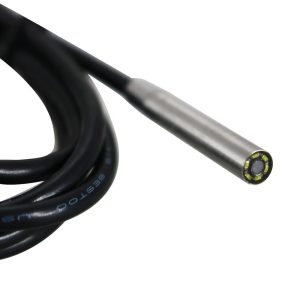
UV light can detect microscopic particles and contaminants that are invisible to the naked eye. Through UV reflection and fluorescence, it quickly determines whether the lens is clean.
(2) Lens Coating Integrity Inspection
Many endoscope lenses feature anti-reflective or anti-fouling coatings, which exhibit a uniform optical effect under UV light. If the coating is scratched, damaged, or aged, abnormal light spots may appear.
(3) Detection of Organic Contaminants
UV light can cause certain organic substances (e.g., proteins, lipids) to fluoresce, allowing detection of contamination residues on the lens, particularly in industries such as healthcare and food processing.
(4) Material Aging Detection
Over time, materials in endoscope lenses may degrade or lose performance. Under UV light, aged areas may exhibit different optical reactions from normal areas, helping to predict the lens’s lifespan.
3. Advantages of UV Light Inspection
| Advantages | Description |
|---|---|
| High Efficiency | Short inspection time, instant issue detection |
| Non-Destructive | Does not cause secondary damage to the lens |
| High Precision | Can detect microscopic scratches or contaminants |
| Wide Applicability | Suitable for various industries, especially high-precision inspection fields |
| Cost-Effective | One-time equipment investment for long-term use |
4. Application Scenarios in Different Fields
Industrial Manufacturing
- Inspect industrial endoscopes for contamination or damage in harsh environments.
- Ensure lens cleanliness to improve imaging precision.
Medical Field
- Ensure endoscope lenses are residue-free after sterilization to avoid cross-contamination.
- Inspect lens coatings for damage to maintain diagnostic quality.
Aerospace
- Inspect lens aging under high temperatures, vibrations, and other conditions.
- Ensure inspection equipment is functioning optimally.
5. How to Properly Use UV Light for Inspection
When using UV light to inspect endoscope lenses, follow these steps: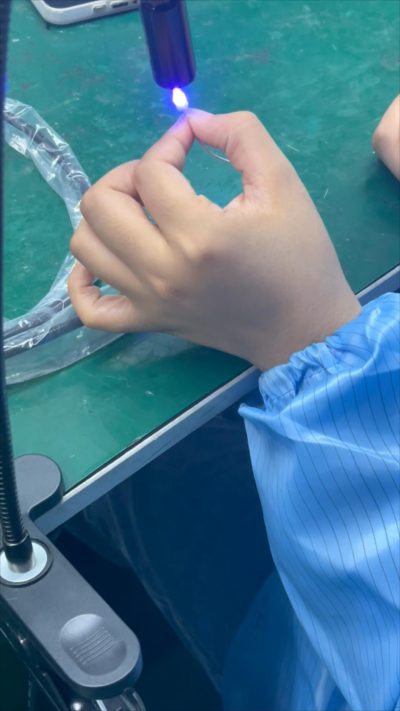
- Prepare the Environment
- Ensure the inspection environment is dimly lit for better observation of fluorescence.
- Use a clean workspace to avoid secondary contamination.
- Clean the Lens Surface
- Pre-clean the lens to remove visible dirt.
- Use appropriate solvents to remove grease.
- UV Light Illumination
- Shine UV light evenly on the lens surface and observe for fluorescent spots or abnormal light reflections.
- Inspect coating uniformity and record suspicious areas.
- Analyze Results
- Based on inspection results, determine whether further cleaning or lens repair is needed.
- Document inspection data for future reference.
Conclusion
UV light inspection offers an efficient and precise method for quality control of endoscope lenses. Whether in industrial maintenance or in meeting the stringent hygiene standards of the healthcare field, this approach significantly enhances inspection efficiency and extends equipment lifespan. If you’re looking for professional endoscope solutions, Shenzhen QingBaoHong Technology Co., Ltd. provides high-quality industrial endoscopes to help you achieve more effective inspection and maintenance work.